
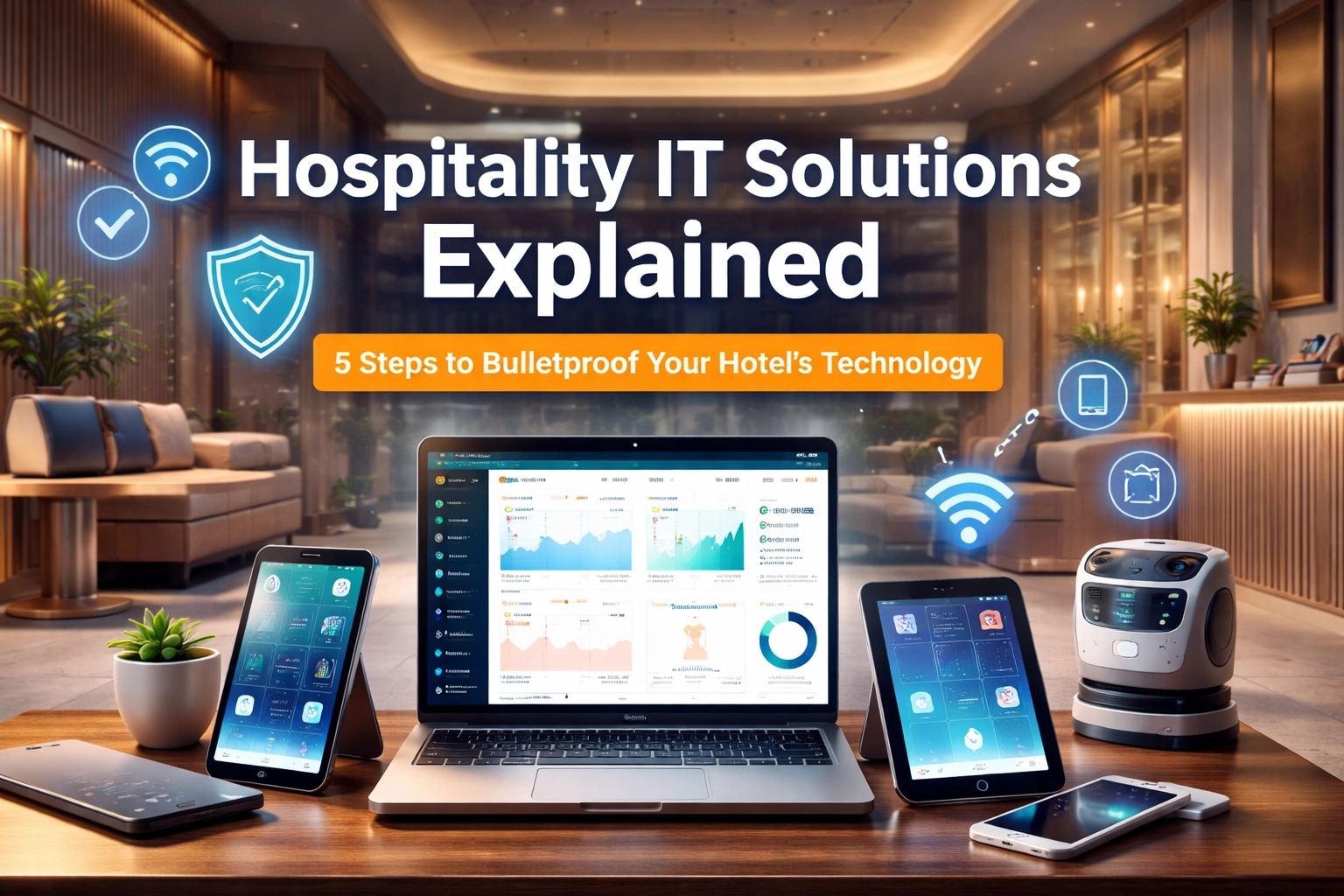
Your hotel's technology is either working for you: or quietly working against you.
I've seen it first-hand: properties where the WiFi drops during peak check-in, where the PMS freezes mid-booking, where a single cyberattack costs more than a year's worth of proper IT investment. The frustrating truth? Most of these disasters are entirely preventable.
If you're a General Manager or hotel owner, you already know that hospitality IT solutions aren't just about keeping the computers running. They're about protecting your revenue, your reputation, and your guests' trust. The challenge is knowing where to start.
That's what this guide is for. Here are five practical steps to bulletproof your hotel's technology: and finally get your IT working as hard as the rest of your team.
Step 1: Build Your Foundation with a Unified Property Management System
Everything in your hotel connects back to your Property Management System (PMS). Reservations, guest profiles, housekeeping schedules, billing: it's all there. If your PMS is outdated, clunky, or disconnected from your other systems, you're building on shaky ground.
A modern, cloud-based PMS acts as the central nervous system of your operation. It consolidates data, reduces manual errors, and gives you real-time visibility into what's happening across your property.

Here's what to look for:
- Cloud-native architecture : Access your data from anywhere, with automatic updates and backups
- Open API integrations : Connect seamlessly with your channel manager, POS, revenue management tools, and guest messaging platforms
- Scalability : A system that grows with you, whether you're running a 20-room boutique or a 200-room city centre property
The biggest mistake I see? Hotels running multiple disconnected tools that don't talk to each other. Every gap between systems is a potential point of failure: and a security vulnerability. A unified PMS eliminates those gaps.
If you're still running legacy software that requires on-site servers and manual updates, it might be costing your hotel more than you realise.
Step 2: Prioritise Cybersecurity Like Your Reputation Depends on It
Because it does.
Hotels are prime targets for cybercriminals. You're processing credit card payments, storing passport details, and handling sensitive guest information around the clock. One breach can mean regulatory fines, legal action, and the kind of headlines no marketing budget can fix.

Robust cybersecurity isn't optional: it's foundational. Here's what a bulletproof security posture looks like:
- Next-generation firewalls protecting your network perimeter
- Endpoint protection on every device: front desk terminals, back-office PCs, tablets, and mobile devices
- Encrypted data transmission for payment processing and guest communications
- Regular vulnerability assessments to catch weaknesses before attackers do
- Staff training to prevent phishing and social engineering attacks
Compliance matters too. If you're operating in the UK, achieving Cyber Essentials certification demonstrates that your property meets government-backed security standards. It's not just a badge: it's proof that you're taking data protection seriously.
The hotels that get breached aren't always the ones with the weakest passwords. They're the ones that assumed "it won't happen to us." Don't be that hotel.
Step 3: Invest in Reliable, Scalable Connectivity
Your guests expect WiFi that just works. No login drama. No buffering. No dead zones in the conference room.
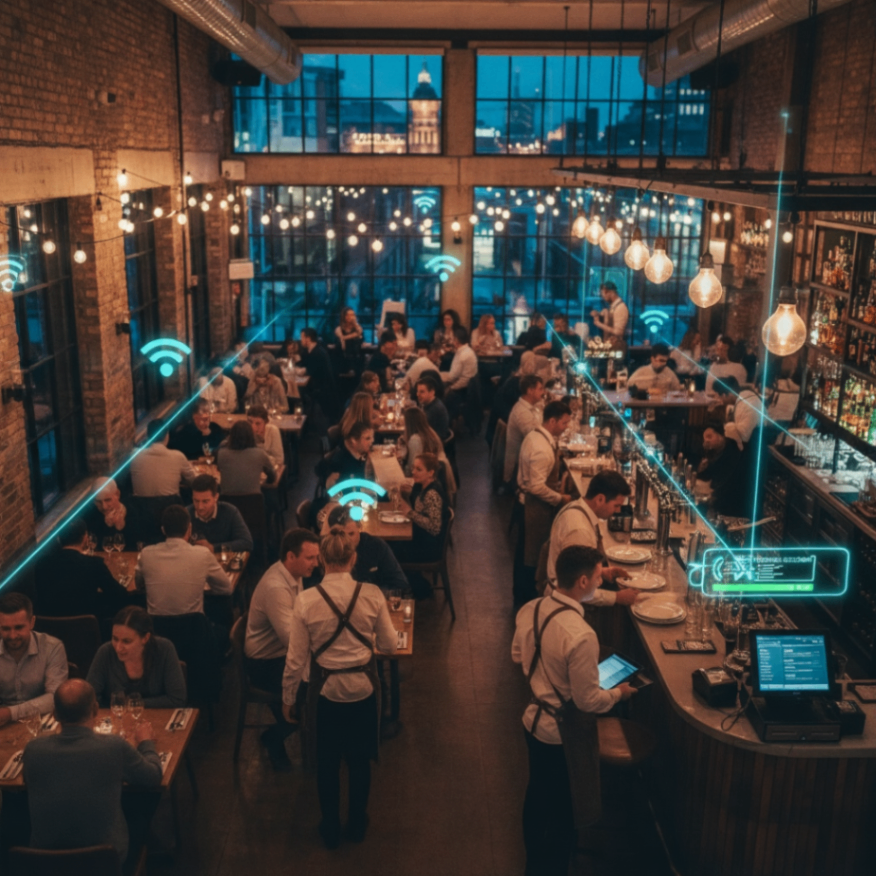
But guest WiFi is only part of the picture. Your connectivity infrastructure also powers mobile check-in, smart room controls, digital key cards, EPOS systems, and every cloud-based tool your team relies on. When the network goes down, everything goes down.
Here's how to get it right:
- Enterprise-grade access points designed for high-density environments: not the consumer-grade routers you'd use at home
- Managed WiFi with bandwidth controls to prevent a single guest streaming 4K video from crippling the network for everyone else
- Redundant internet connections so a single ISP outage doesn't take your entire operation offline
- Network segmentation to keep guest traffic separate from your operational systems: critical for both performance and security
A common pitfall: underestimating demand. Your network needs to handle peak occupancy on a busy weekend, not just average Tuesday traffic. Build for the worst-case scenario, and normal operations will feel effortless.
Step 4: Create a Seamless, Integrated Guest Experience
Technology should make your guests' stay easier: not more complicated.
The best hospitality IT solutions work invisibly in the background, powering experiences that feel effortless. Mobile check-in that lets guests skip the queue. Digital room keys on their phones. In-room tablets for ordering room service or requesting extra towels. Personalised recommendations based on their preferences.
When these systems are integrated properly, they don't just delight guests: they free up your staff to focus on high-touch service rather than troubleshooting tech.
Key components of an integrated guest experience platform:
- Mobile-first check-in and checkout that syncs directly with your PMS
- Guest messaging platforms for real-time communication before, during, and after their stay
- In-room technology like smart TVs, voice assistants, or tablet controls
- Centralised guest profiles that capture preferences and history across visits
The hotels leading the pack are the ones embracing these tools now. If you're curious about where AI fits into the picture, we've explored why hotels ignoring artificial intelligence risk being left behind.
Step 5: Partner with Specialist Hotel IT Support
Here's the uncomfortable truth: you can invest in the best systems in the world, and they'll still fail without proper support.
Generic IT providers don't understand hospitality. They don't know that your PMS integration is business-critical, that a WiFi outage during a wedding reception is a disaster, or that your night manager needs help at 2am: not during standard office hours.
Specialist hotel IT support means working with a team that understands your world. A team that's proactive, not reactive. A team that monitors your systems around the clock, catches problems before they escalate, and knows how to prioritise when everything seems urgent.

What to look for in a hospitality-focused MSP:
- 24/7 support tailored to the realities of hotel operations
- Proactive monitoring that identifies issues before guests or staff notice
- Deep integration expertise with PMS platforms, channel managers, and hospitality-specific tools
- On-site capability when remote troubleshooting isn't enough
- A consultative approach that helps you plan for the future, not just fix today's problems
The right partner doesn't just keep your systems running: they help you leverage technology as a competitive advantage.
If you're unsure whether your current setup is costing you, our IT downtime calculator can help you quantify the risk.
The Bottom Line
Bulletproof hotel technology isn't about buying the most expensive tools or chasing every shiny new trend. It's about building a foundation that's unified, secure, reliable, guest-focused, and properly supported.
Get these five steps right, and your IT becomes invisible: in the best possible way. Your guests enjoy seamless experiences. Your staff have the tools they need. And you sleep better knowing your systems can handle whatever comes next.
Ready to strengthen your hotel's technology infrastructure? Get in touch with our team to discuss how specialist hospitality IT solutions can transform your operation.
Leave a Reply